Managing Indoor Humidity When Kansas Heat Exceeds 100 Degrees
Managing Indoor Humidity When Kansas Heat Exceeds 100 Degrees
The Clammy Reality of Late Summer Heatwaves
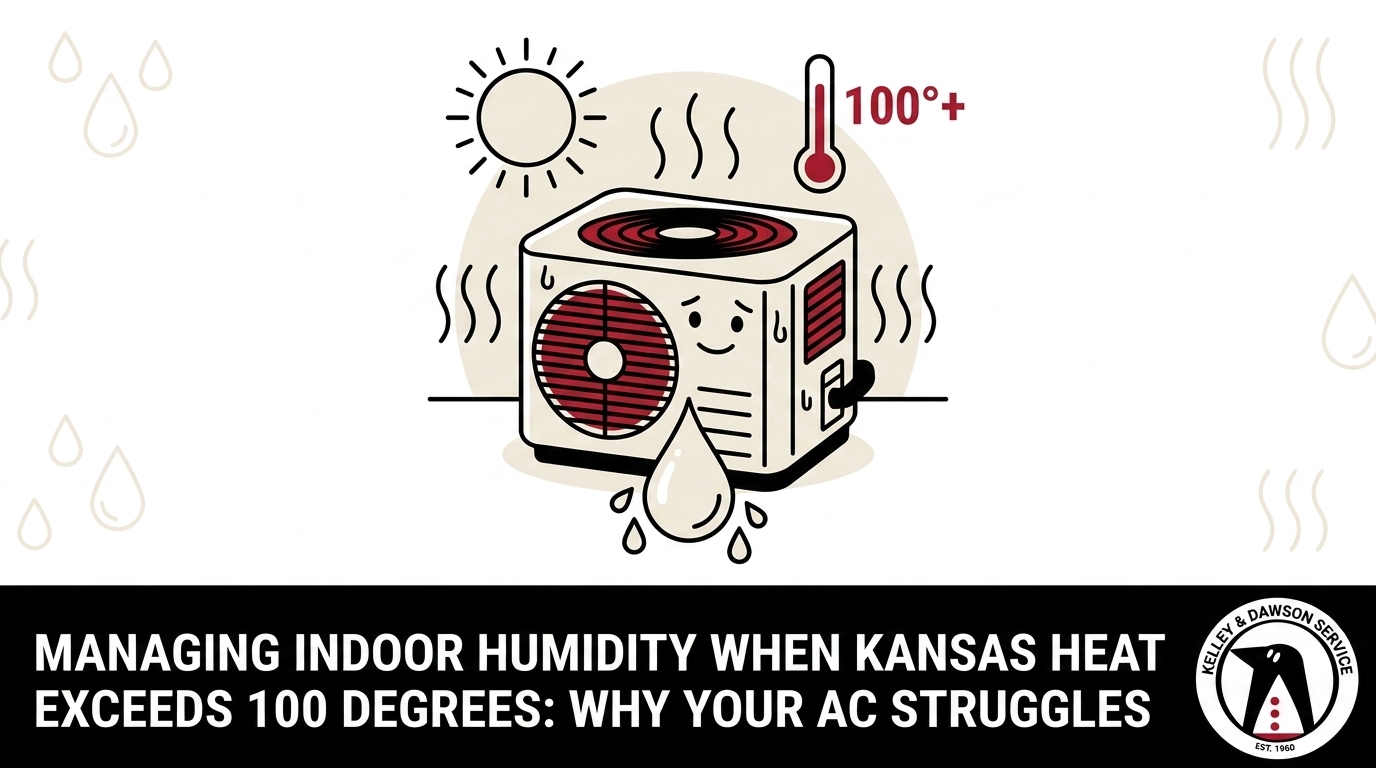
Late July brings the kind of stifling weather that forces your cooling system to work around the clock, making managing indoor humidity when Kansas heat exceeds 100 degrees a top priority for homeowners. At Kelley & Dawson Service, our technicians field countless calls every summer from Wichita residents who rely on their HVAC system to keep their living space comfortable when outside temperatures soar. But what happens when your thermostat reads a cool 72 degrees, yet your skin feels sticky and the air inside feels heavy and thick? This clammy reality is one of the most frustrating challenges our team sees during the peak of summer.
If you are struggling with this uncomfortable environment, it might be time to evaluate your air conditioning system.
Cooling the air inside your home is only half the battle. Removing excess moisture is equally critical for your overall comfort. During specific late summer weather patterns, high dew points combine with extreme heat. This combination forces your HVAC equipment to work continuously just to keep up. Modern homes are built with excellent insulation and tight seals to maximize energy efficiency. While this keeps the hot air out, it also traps moisture inside, turning your living room into a damp, uncomfortable space.
This leaves you with an important decision to make. You need to figure out if your air conditioner is simply struggling because it lacks basic maintenance, or if the equipment has reached its structural limit for moisture removal. Understanding why your home feels so muggy is the first step toward finding a permanent fix. A dedicated indoor air quality strategy is often the only way our specialists find to truly reclaim your comfort when the heat index climbs.
Latent vs. Sensible Cooling: How Your AC Handles Moisture
To understand why your home feels damp, you have to look at how your air conditioner actually works. Air conditioners perform two distinct jobs at the same time: sensible cooling and latent cooling. Sensible cooling refers to lowering the actual temperature in the room. This is the change you see on your thermostat. Latent cooling refers to the process of extracting water vapor from the air, which lowers the humidity and makes the room feel comfortable.
Your system handles moisture through a process of condensation. Warm, moist air from your house blows over the cold evaporator coils inside your indoor unit. As the air hits the cold metal, the water vapor turns into liquid condensation. This liquid drips into a pan and drains away outside your home. When the system works perfectly, you get dry, cool air blowing out of your vents.
• Sensible Cooling — What It Does: Lowers the air temperature — How You Notice It: The thermostat number drops to your target setting.
• Latent Cooling — What It Does: Removes water vapor from the air — How You Notice It: The air feels crisp, dry, and comfortable on your skin.
However, extreme heat indexes easily overwhelm the latent cooling capacity of standard residential systems. High dew points mean the air holds significantly more water. Your system requires much longer run times to dehumidify that heavy air effectively.
The Limits of Standard Equipment
Most standard air conditioners are designed for average summer days, not extreme regional heat domes. When the forecast calls for 100+ degrees, a pattern we see often is the sheer volume of heat entering your home forcing the system to run constantly. When moisture levels exceed the design capacity of your equipment, the system prioritizes temperature drops over humidity removal. The unit works so hard to hit the number on the thermostat that it fails to wring the excess water out of the air, leaving you with a cold but sticky environment.
Why Oversized ACs Create Muggy Indoor Climates
One common misconception our installation team encounters is that installing a larger air conditioner will solve all your summer comfort problems. Many homeowners in Wichita KS assume that a bigger unit will power through the extreme heat and keep the house perfectly comfortable. The truth we always explain to our customers is that an oversized air conditioner is one of the leading causes of high indoor humidity.
When an AC unit is too large for the square footage of a home, it cools the air temperature very quickly. This rapid drop in temperature causes the system to shut off before it has time to extract humidity. This process is called short-cycling. The system turns on, blasts cold air for ten minutes, satisfies the thermostat, and shuts down.
The problem is that it takes about fifteen minutes of continuous operation for the evaporator coil to get cold enough to start condensing water effectively. If your oversized system shuts off after ten minutes, it never actually removes the moisture from the air. Continuous, longer cycles are absolutely required for the evaporator coil to properly wring moisture out of your living space.
The resulting environment is cold but clammy. You might find yourself constantly adjusting the thermostat, pushing it down to 68 degrees just to force the system to run longer. This wastes a massive amount of energy, drives up your utility bills, and puts unnecessary wear and tear on your compressor. In our professional experience, proper sizing is non-negotiable if you want a dry, comfortable home.
Checklist: AC Tune-Up or Dedicated Dehumidification?
When late July heat pushes your system to the edge, how do you know if you need a repair or an upgrade? In our experience servicing Wichita homes, high humidity is sometimes simply a symptom of a neglected air conditioner. Other times, the equipment is working perfectly but simply cannot handle the moisture load. Our technicians recommend using this checklist to help diagnose the root cause of your damp indoor air:
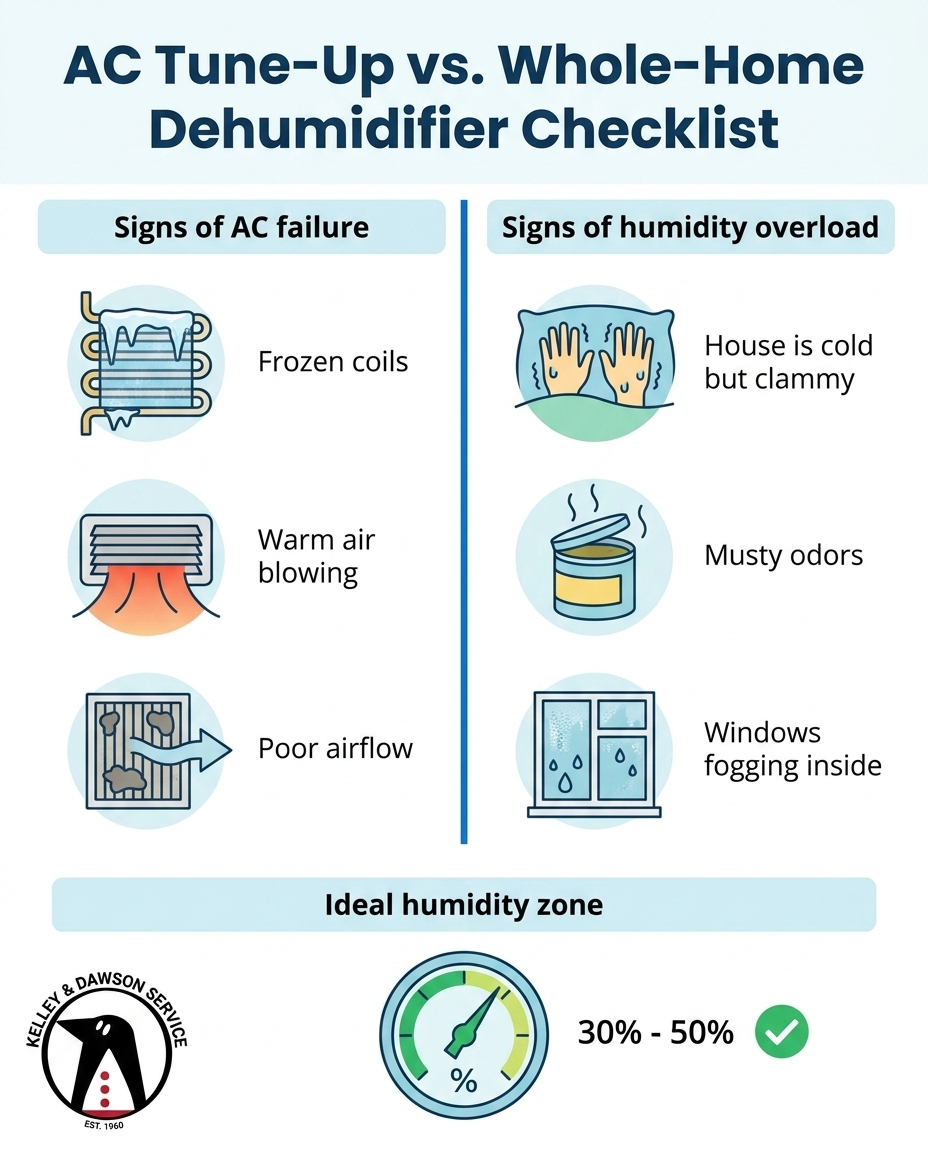
• Dirty evaporator coils: A layer of dust and dirt insulates the coil, preventing it from getting cold enough to pull moisture out of the air. This usually points to a need for a professional tune-up.
• Clogged condensate drains: If the water your system extracts cannot drain away, it backs up and evaporates right back into your ductwork. A technician can clear this blockage quickly.
• Low refrigerant levels: If your system is low on refrigerant, it cannot absorb heat or moisture effectively. This requires immediate professional attention to find and fix the leak.
• The house is cold but sticky: If your AC runs perfectly, hits the target temperature easily, and the house is cold, but the air still feels thick and damp, your system lacks the latent cooling capacity you need.
• High thermostat humidity readings: Check your smart thermostat. If the temperature is 72 degrees but the humidity reading is hovering at 60% or higher, your primary AC is not keeping up.
It is always best to have a professional assess the system before investing in new equipment. Scheduling routine AC maintenance ensures your current unit is operating at peak performance before you make any decisions about supplemental dehumidification.
AC Tune-Up vs. Whole-Home Dehumidifier Checklist
Immediate Steps to Lower Humidity Before the HVAC Tech Arrives
If you are currently suffering through a heatwave and waiting for one of our HVAC professionals to arrive, there are things you can do right now to make your home more bearable. When the forecast predicts 100+ degrees, every little bit of moisture reduction helps your system perform better.
1. Utilize your exhaust fans: Turn on the bathroom exhaust fans during and after showers. Run the kitchen exhaust fan while cooking. These fans vent localized moisture directly outside before it can spread through the house.
2. Seal your windows and doors: Ensure all windows and doors are tightly closed and locked. Even a small crack lets heavy, humid outdoor air pour into your home, forcing your AC to work harder.
3. Adjust your daily habits: Avoid boiling water, taking long hot showers, or running the clothes dryer during the hottest parts of the day. These activities release massive amounts of latent heat and moisture into your indoor air.
4. Keep interior doors open: Promote better airflow by leaving bedroom and office doors open. This allows air to circulate freely back to the return vents, helping your system process the air more efficiently.
Taking these proactive steps can provide temporary relief. For more ways to protect your home during the hottest months, review our summer home maintenance tips to keep everything running smoothly.
Why 30-50% Indoor Humidity Matters During Peak Summer
We always remind our customers that ignoring high indoor humidity is not just a comfort issue; it directly impacts your health and the structural integrity of your property. The Environmental Protection Agency (EPA) explicitly recommends that indoor relative humidity should remain between 30% and 50%. Staying within this zone is critical for homeowners in Wichita KS during the peak summer months.
When indoor humidity climbs above 50%, your home becomes a breeding ground for biological pollutants. Mold growth accelerates in damp, dark places like basements, bathrooms, and inside your ductwork. Dust mites thrive in humid environments, multiplying rapidly in your carpets and bedding. This leads to poor indoor air quality, which can trigger allergies and respiratory issues for your family.
Excessive moisture also makes the air feel significantly warmer than it actually is. Your body cools itself by sweating, and the evaporation of that sweat removes heat from your skin. In a highly humid room, the air is already saturated with water, so your sweat cannot evaporate. A room sitting at 74 degrees with 65% humidity will feel much hotter and far more uncomfortable than a room at 76 degrees with 45% humidity. This causes homeowners to constantly lower the thermostat, wasting energy without ever achieving true comfort.
Finally, high humidity damages your home. Hardwood floors can cup and warp as they absorb moisture from the air. Cabinetry can swell, and doors may begin to stick in their frames. Controlling moisture is an investment in protecting your home's infrastructure.
Whole-Home Dehumidifiers: The Definitive Solution
When standard air conditioning systems reach their structural limits during late July heatwaves, we strongly recommend a dedicated solution. Whole-home dehumidifiers are the definitive fix for muggy, uncomfortable houses. Unlike small, portable units that only dry out a single room and require constant emptying, a whole-home system manages the moisture levels for your entire property automatically.
A whole-home dehumidifier integrates directly into your existing HVAC ductwork. It pulls air from your return ducts, cools it to extract the moisture, and then sends dry, comfortable air back into your main air stream. The condensation drains away automatically through your existing plumbing.
The synergy between a dedicated dehumidifier and your air conditioner is remarkable. The dehumidifier removes the heavy moisture load, allowing the AC to focus entirely on lowering the temperature efficiently. Because dry air feels cooler on your skin, you can actually set your thermostat a few degrees higher without sacrificing any comfort. This results in significant energy savings over the long term.
Our 60 years of multi-generational experience at Kelley & Dawson Service means we have seen Wichita climate trends evolve firsthand. We know exactly how modern building practices and rising heat indexes interact, allowing our team to definitively advise when a standard AC is no longer enough. Investing in proper equipment provides long-term value, protecting your home and preventing you from repeatedly stressing an overworked air conditioner. If you are ready to fix the problem permanently, exploring indoor air quality solutions is the best next step.
Reclaim Your Home's Comfort This Summer
Feeling clammy and sticky indoors is a solvable problem, not just an inevitable part of summer in Wichita KS. You do not have to settle for a home that feels like a damp basement every time the temperature spikes.
The key to reclaiming your comfort is properly diagnosing the issue. You must determine whether you are dealing with an AC capacity issue or a simple maintenance need. Do not wait until your system completely breaks down under the strain of heavy, humid air. Schedule a professional assessment with our team before the peak heat pushes your equipment to failure, and enjoy a crisp, cool, and perfectly dry home all season long.
FAQ
Why is my house so humid when the AC is running? Your AC may be oversized, causing it to short-cycle and shut off before it can remove moisture. It could also be struggling with a dirty evaporator coil that prevents effective condensation. When the system doesn't run long enough, the temperature drops but the humidity stays trapped inside.
How do I get the humidity out of my house in the summer? Start by using exhaust fans in the kitchen and bathrooms to vent moisture outside. Ensure your windows and doors are sealed tightly against the humid outdoor air. For a permanent fix, installing a whole-home dehumidifier works alongside your AC to extract excess moisture automatically.
Does AC remove humidity? Yes, an air conditioner removes humidity as a byproduct of the cooling process. Warm air blows over cold coils, causing water vapor to condense into liquid and drain away. However, during extreme heatwaves, a standard AC often cannot keep up with the sheer volume of moisture in the air.
What is the ideal indoor humidity in summer? The ideal indoor relative humidity should stay between 30% and 50%. Keeping moisture levels in this zone prevents mold growth, discourages dust mites, and makes the air feel crisp and comfortable. Anything above 50% will start to feel sticky and clammy.
Can a dirty AC filter cause high indoor humidity? Yes, a dirty air filter restricts airflow over the evaporator coil. When airflow is blocked, the coil cannot effectively extract heat or moisture from the air circulating through your home. Changing your filter regularly is one of the easiest ways to support proper dehumidification.
“We've been doing business with Kelly and Dawson Service for a long time, and they’ve always been fantastic to work with. Most recently, our AC went out on a Sunday right when we needed it most. We called Kelly and Dawson, and within just 30 minutes, their technician Caleb showed up at our door. He was friendly, knowledgeable, and had the issue diagnosed and fixed within an hour. We couldn’t have asked for better service, especially on a weekend. Highly recommend this company and their awesome technicians. Whether it's routine maintenance or an emergency repair, they’ve always come through for us.”
Jacob S
Our AC went out late on a Friday night. Kelly & Dawson were there first thing Saturday morning. The gentlemen was polite, very experienced, and had us back up and running in 30 minutes. The service fee was reasonable as well. I would recommend them in a heartbeat!
Captain M
They checked my furnace and got it all ready for winter. Very courteous and professional. An excellent company with outstanding customer service. I highly recommend them for all your heating & air needs.
Stacy S
This company is so great. Bought a new central ac unit a year ago. Today was the first maintenance/check up day and Daniel came out. From the beginning of buy the unit, the communication with everyone at Kelley and Dawson has been great right up to this morning when Daniel checked and cleaned the ac. Efficient, friendly....this company reminds me of living in small town with wonderful people when you need service.
Susan L
We've been using Kelley & Dawson Service for 5 years now and they've been wonderful every single time. Caleb is super kind, polite, and really professional. They always take great care of us – highly recommend!
Christina L
We’ve used them in the past for a new furnace and have not had any issues to date We called them out this past Saturday when our AC went out. The initial caller let me know a technician would be calling me. When Daniel called he let me know he had a couple clients before me and then would be out. He called again to let me know he was on his way. Daniel was respectful and found the problem quickly. Very affordable for an emergency call, part and labor. Thank you for the great communication and prompt service!
Buy today, pay over time with the Wells Fargo Home Projects Credit Card¹, issued with approved credit by Wells Fargo Bank, N.A., an Equal Housing Lender.With approved credit from Wells Fargo, you’ll enjoy:
Today. Convenient monthly payments available.²
Flexible financing options
Easy online account management
Plus, by taking advantage of financing, you won’t use up your existing funding sources, like a home equity line of credit, other credit card or bank account. They’ll still be available when you need them. Please contact us to find out which financing options are available to you, or to learn about special financing promotions.
¹ Subject to credit approval. Call for details. ² The [Card Name] credit card is issued with approved credit by Wells Fargo Bank, N.A. Ask for details.
Sed iaculis aenean sit sed risus arcu vitae integer elit.
5 min read
Managing Indoor Humidity When Kansas Heat Exceeds 100 Degrees
When late July temperatures soar, your AC might keep the house cool but leave the air feeling thick and damp. Find out if your system needs a tune-up or dedicated dehumidification.
The Danger of Treating Refrigerant Like Gas in a Car
Air conditioners do not consume refrigerant the way a vehicle engine burns fuel. If your system has low pressure, a quick top-off is just a temporary band-aid for a physical leak.





.webp)